
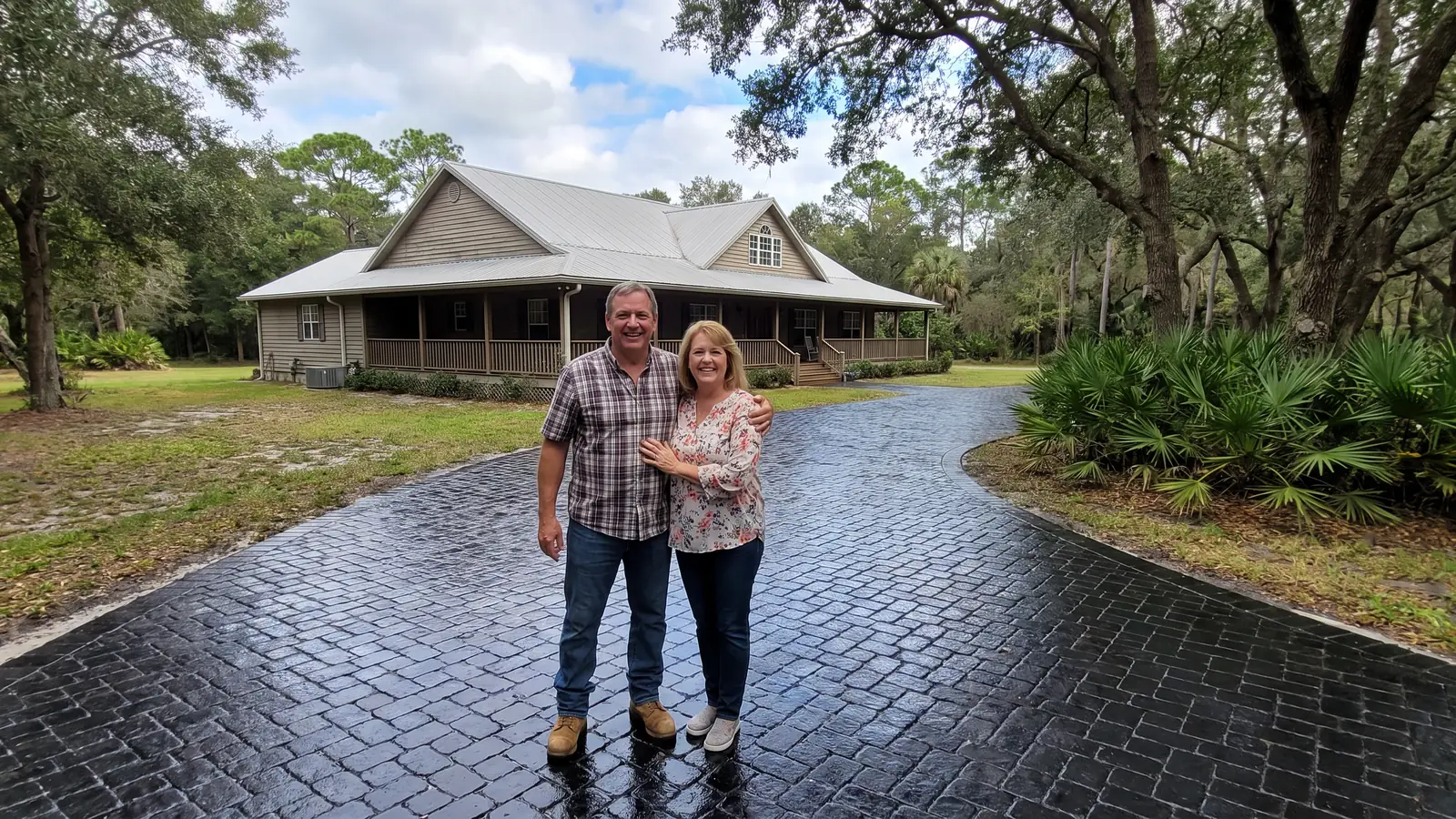
Paver sealing for Royal Terrace homes
Paver Sealing in Royal Terrace, FL
Royal Terrace homes near Moncrief Road can get worn pavers cleaned and sealed, with a free estimate at (904) 842-3763.
- Brings out deeper paver color
- Fresh joint sand helps lock pavers in place
- Gives weeds less room to grow
- Makes the surface easier to keep clean
- Free estimate, no obligation
Request a Free Estimate
Free, no obligation.
Fast, careful paver sealing in Royal Terrace
Paver sealing in Royal Terrace comes with a free estimate for the driveway, front walk or back patio you already have. A local contractor cleans the surface, refills the joints with sand and applies the coat. Dial (904) 842-3763 and you get a reply within 1 business day, usually much sooner.
Maybe the walk to your door has gone gray and patchy, and the sand has washed out of the seams. A wash, fresh sand and a new coat give it one even color again. If you would rather start in writing, you can ask for a free estimate online and describe your pavers.
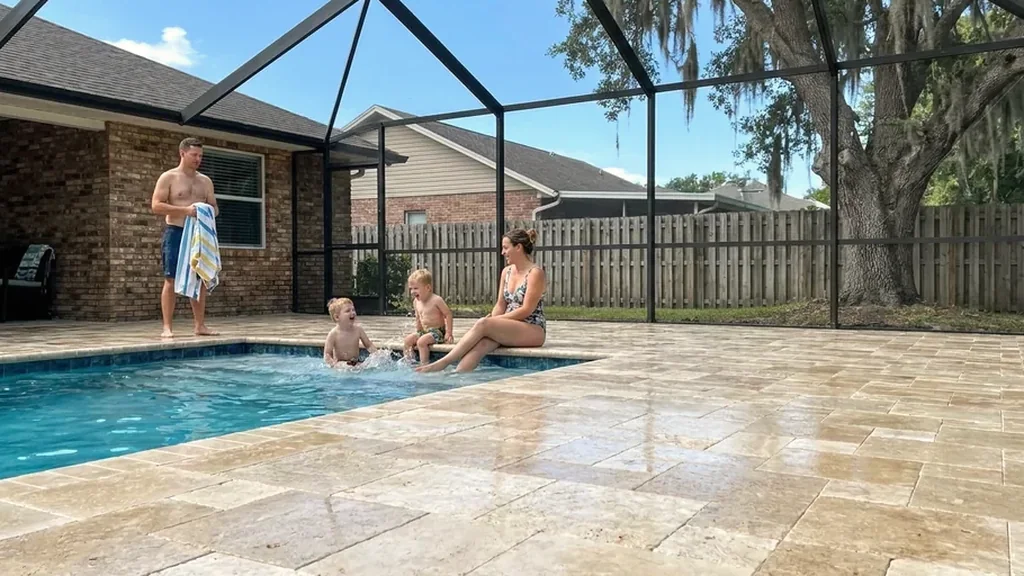
Why hire a local paver sealing contractor in Royal Terrace?
Royal Terrace has compact lots, homes of different ages and a long record of street and drainage work, and each of those shapes a paver job. To hear how that changes a paver job, ask for a free estimate online.
A free first visit
A contractor looks at your Royal Terrace pavers, measures them and quotes a price before you commit to anything.
A range to measure against
Royal Terrace bids can be checked against the published $1.75 to $3.25 per square foot for cleaning, sanding and sealing.
Small jobs welcome
A front walk, a short drive or a small patio is a normal job. Ask how a small area is priced, since smaller jobs often cost more per foot.
You decide
You pick the date and the finish, and a Royal Terrace estimate carries no obligation. Saying no is fine.
Get Your Free Estimate in Royal Terrace
Tell us about your pavers in Royal Terrace.
Free, no obligation
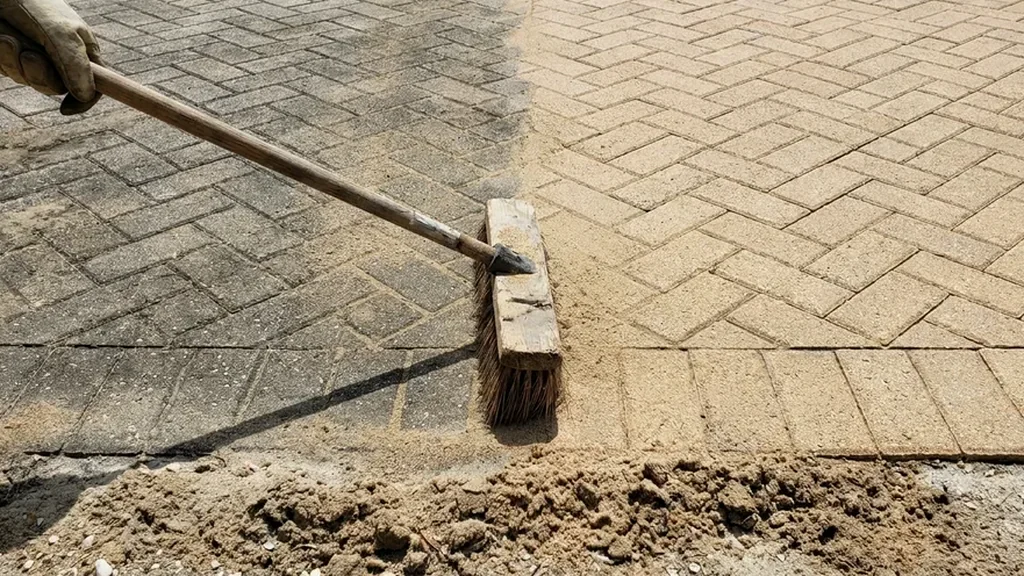
What paver problems show up most in Royal Terrace?
Sand lost to heavy rain
Summer storms in Jacksonville come hard and fast, mostly between May and September. The USDA says the Ortega soil series in Duval County is deep fine sand with rapid permeability. Water moves through that kind of ground quickly and can carry joint sand with it. Open joints let soil in, which means weeds find a place to root. Fresh sand and a coat of sealer hold the joints together, so the weeds you pull stay pulled for longer. A short drive or a front walk drains toward the street, so that is where the sand ends up. Sweeping a handful back in is a stopgap, not a repair.
Small paver areas that wear unevenly
Homes near Royal Terrace Addition run from about 1,000 to 1,750 square feet, so the paver areas are often a front walk, a short drive or a small back patio. On a short drive, the same few spots take every tire turn, and a car parked in the same place leaves oil in the same place. A Jacksonville company says turning tires loosen joint sand and let pavers settle. Those spots are reset before sealing, since sealer preserves a dip. Mark them for the contractor at the first visit, because a low corner is easy to miss in a photo. A photo of the drive from the street helps show which part takes the load. Pavers beside a car's front wheels loosen first. Pointing to that strip when the contractor arrives helps.
Unknown sealer from past owners
Houses in Royal Terrace have been built, rebuilt and repaired across several decades, including 214 new homes built by Habijax. Paver areas went in whenever an owner got to them, often with no paperwork. Water-based and solvent-based sealers do not mix, so one cannot go over the other. Sealteam Jax says oil-based coats must come off first, which adds work and cost. A brand name, a receipt or even a note from the last owner can settle the question quickly. Many owners find this out only when a contractor asks. The city's seven-year program rebuilt streets, added curbs and sidewalks and put in sewers, so many properties were touched by work at about the same time. That may explain why some pavers on a block look alike in age.
White haze on newer pavers
Unilock says efflorescence is a white mineral haze that will not hurt the strength of concrete pavers, though rain alone may not remove it. It shows up most on pavers that are fairly new, and it has to be cleared before a sealer goes on. A newer Royal Terrace patio may need to wait before its first coat. The contractor can tell what your surface needs and whether the first coat should wait. A short wait costs less than a cloudy first coat. Sealing on top of haze can leave a cloudy look. Haze is easy to confuse with old sealer gone cloudy. The contractor can tell by how it feels and where it shows.
Water that sits on flat lots
The same USDA description says Ortega soil has slow surface runoff, so after a hard storm water can sit on a flat lot before it sinks in. A Royal Terrace walk that stays wet grows green film and dries slowly. Sealer needs a dry surface, which means a wet week can push a job back. Pointing out the wet spots on your first call lets the contractor plan the drying time. The city's program also added drainage improvements and a master storm water facility, which helps. A low corner of your own lot may still need attention.
Which Royal Terrace homes should think about sealing their pavers?
Any home whose pavers have turned gray, lost joint sand or sprouted weeds should think about it. Royal Terrace sits in the Mid-Westside part of Jacksonville, and Wikipedia counts it among the Northside neighborhoods, so you may see it listed either way. ZIP 32209 had 36,656 people and 17,648 housing units in 2020. Tell the contractor your street when you ask for a free estimate online.
Homes near Royal Terrace Addition sit on Tuskegee Road, Meharry Avenue, West 45th Street, Talladega Road and Morehouse Road, and run about 1,000 to 1,750 square feet. About 75 percent of the housing in the ZIP is single-family. Compact lots mean compact paver areas, so quotes are usually for a few hundred square feet at most. Call (904) 842-3763 and describe your walk, drive or patio.
Many homes here were rebuilt or newly built in the years before 2004. A seven-year city program put in sewers, drainage, curbs and sidewalks, resurfaced or rebuilt the streets, and Habijax built 214 homes. A house from that period may have younger pavers, so say when your home went up when you ask for a free estimate online.
What does paver sealing cost in Royal Terrace?
Royal Terrace jobs are priced against the regional $1.75 to $3.25 per square foot to clean, sand and seal. A small job such as a front walk or a short drive often falls toward the higher end of that range, because prep time does not shrink with the surface. A cost guide says small projects can also meet a company's minimum job size. For a figure based on your area, ask for a free estimate online, and the estimate is free with no obligation.
Larger jobs earn a better rate per foot, so a drive, walk and patio measured together can beat three separate quotes, and one visit saves you scheduling twice. Safe Touch says it quotes after the joints are inspected, and that sand lost to summer storms must be restored before sealing. Call (904) 842-3763 and the contractor can tell you which of these apply to your Royal Terrace lot.
| Paved area | Typical example | Clean, sand and seal |
|---|---|---|
| 300 sq ft | Small patio or walkway | $525 to $975 |
| 600 sq ft | Two car driveway | $1,050 to $1,950 |
| 1,000 sq ft | Large driveway or pool deck | $1,750 to $3,250 |
| 1,500 sq ft | Driveway plus pool deck | $2,625 to $4,875 |
Math based on the $1.75 to $3.25 per square foot that Northeast Florida paver companies publish. Your contractor sets the actual price after seeing the surface. Repairs, leveling and stripping failed sealer are usually extra.
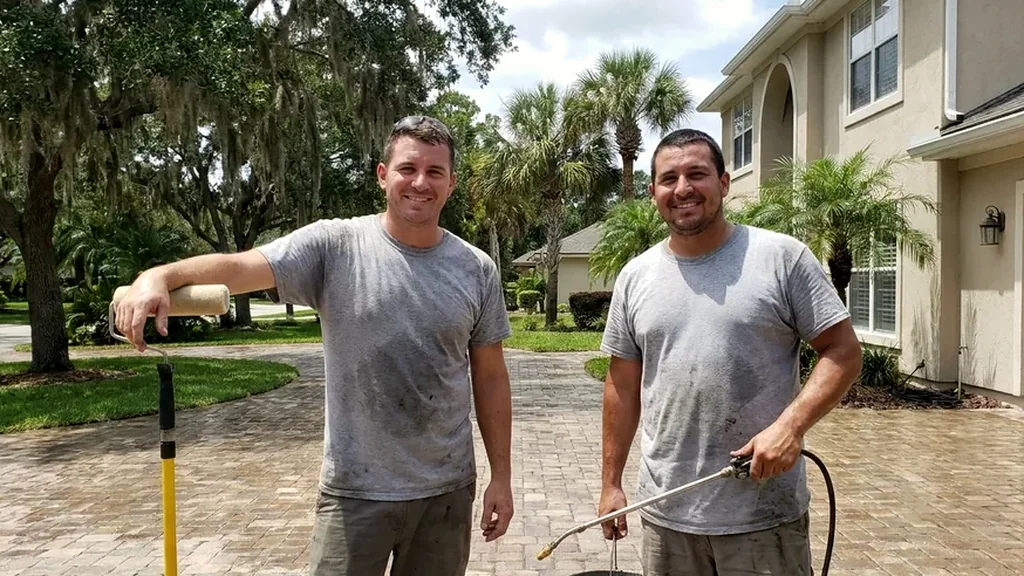
How does a paver sealing job work in Royal Terrace?
Look at the whole area
The contractor starts by measuring the pavers and noting how water runs off the walk or drive, where the sun lands and where the pavers have moved. Low or lifted spots are reset before sealing, because a coat would preserve a dip. The contractor also looks for an old coat and asks what you know about it, since a water base and a solvent base do not mix. Share a brand name or a date if you have one, even a rough one. A photo of any low spot helps, and so does a note about where the water pools. Mention if the walk is shared with a neighbor's property, so the job covers the right area.
Wash the pavers clean
The wash clears grime, algae, stains from leaves, tire marks and oil. Many marks lighten a lot, and a deep stain may stay faintly visible. If the pavers show a white haze, it has to clear before sealing. Care is taken near doors, steps and plants so rinse water goes where it should. A walk close to a front step gets the same cleaning as the rest of the surface.
Fill the joints
New sand goes into each joint and gets packed down until it is full. A full joint also gives the sealer something to bond to. Sand that summer storms pulled out is replaced here, as Safe Touch describes. The sealer then holds the sand in place, which is why the two steps are done together. On a small area, even a few extra bags of sand make the difference between a thin repair and a full one.
Wait for dry weather
The surface must be dry before the coat. Damp pavers can leave a white or blotchy finish, according to one local company. In summer that can move a date by a day or two. A careful contractor waits rather than seal damp pavers, and tells you right away. Small areas dry faster than big ones, so a short walk can be ready sooner than a full drive.
Seal in your chosen finish
The sealer is sprayed and rolled into the joints in even passes, in the matte or wet look you picked. A wet look shows scuffs sooner, which matters where cars turn. Quotes from local companies suggest a fresh coat after about two to five years, give or take. Ask for the product name so the next coat matches the first. Plan on feet within hours and cars after about a day, as the contractor will confirm. On a small job the sheen choice shows up fast, so be sure of it first.
Complete paver services in Royal Terrace
A Royal Terrace job goes in order: clean the surface, refill the joints, let it dry, then seal. Small areas move quickly, but each step still gets its own time, including drying. The coat goes on last so nothing dirty is trapped under it, and it bonds to clean pavers. To ask how long your job would take, call (904) 842-3763 and describe the size of the area.
Short driveways take tires, oil and turning wheels in the same few spots. Front walks pick up foot traffic and green film where the sun is thin. A back patio takes chairs, planters and a grill. Tell the contractor which of these you have when you ask for a free estimate online.
Sealer comes in two bases, water and solvent, and two sheens, matte and wet look. A water base and a solvent base do not mix, so an old coat limits the choice. Matte keeps the color natural, and a wet look deepens it, though it shows scuffs sooner, which matters on a drive. Call (904) 842-3763 to talk through the finish for your home.
Summer brings the most rain, from May to September, so those dates can move. The winter months are the driest stretch. A dry week gives a better chance of a clean finish, and the contractor will say so if the forecast is shaky. For a date that fits you, ask for a free estimate online.
Questions to ask before you hire
- Will a rain shower the night after the job hurt the finish?
- What do you do about weeds growing up through the joints before sanding?
- How much will a satin or wet look finish change the color of my pavers?
- What should I see on the finished surface that tells me the job was done right?
- Is the quote one price for wash, sand and seal, or are they billed apart?
- Can you clean off the rust stains from my well water sprinklers?
- If I live outside town on a long dirt drive, is there a trip charge?
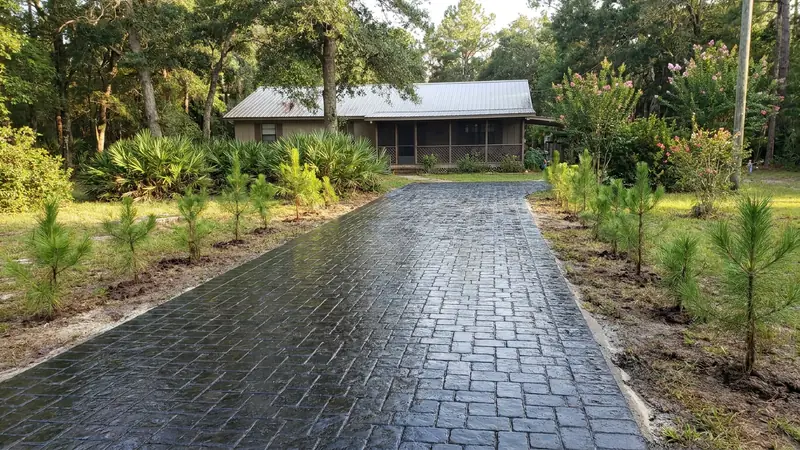
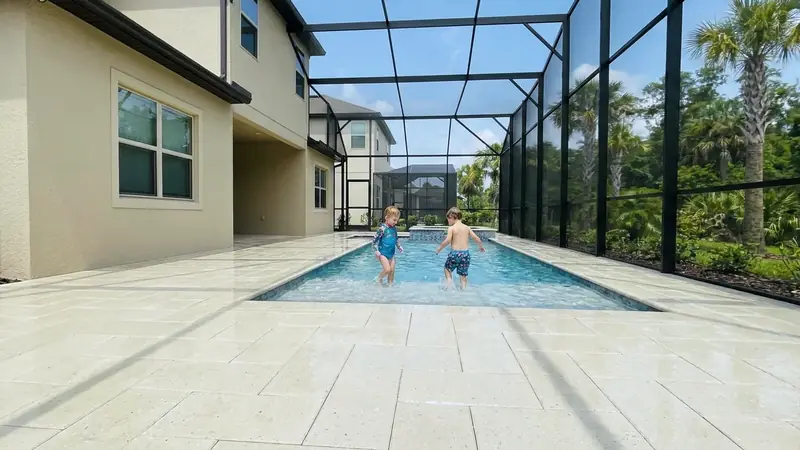
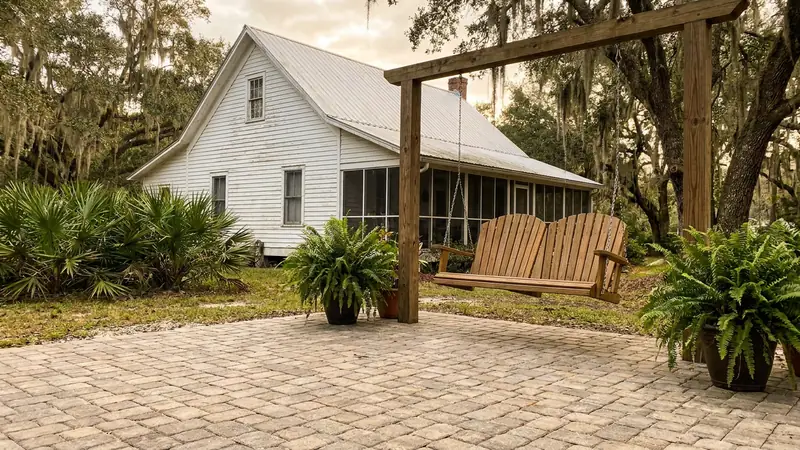
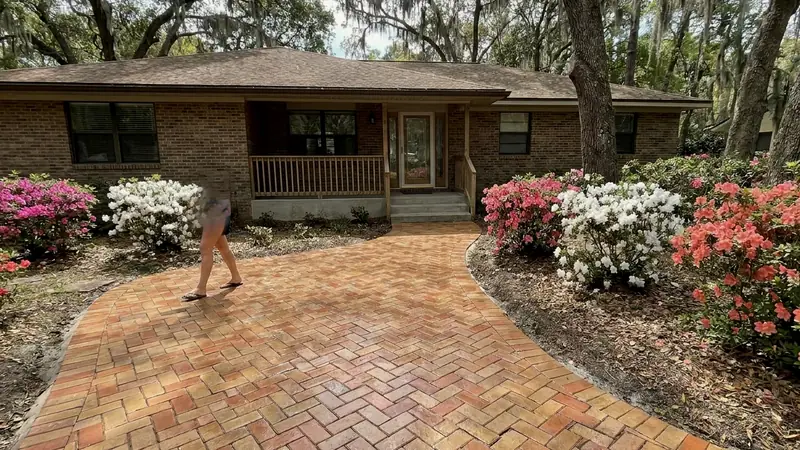
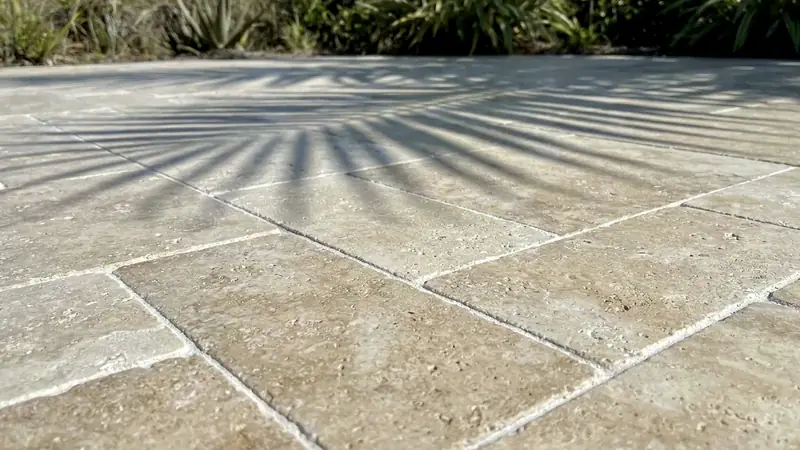
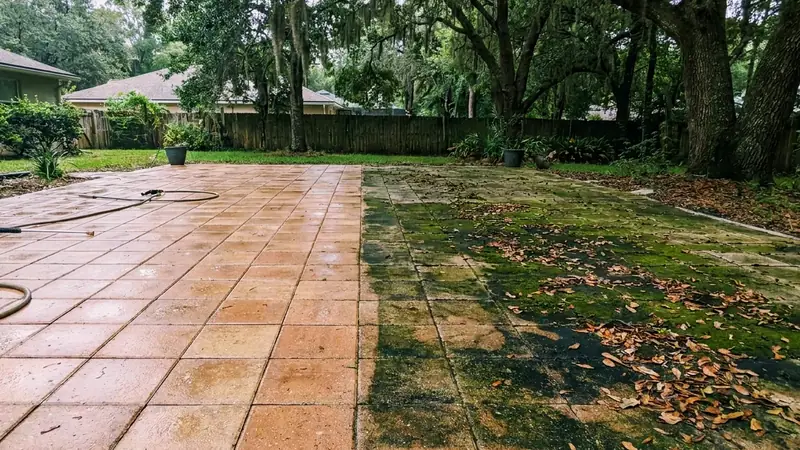
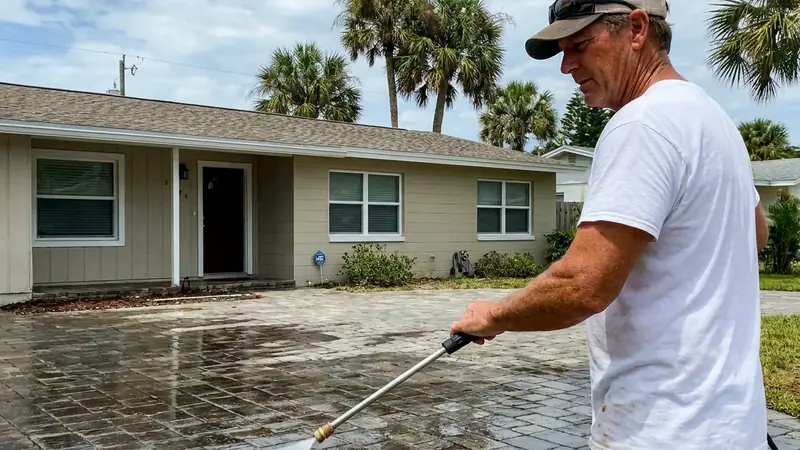
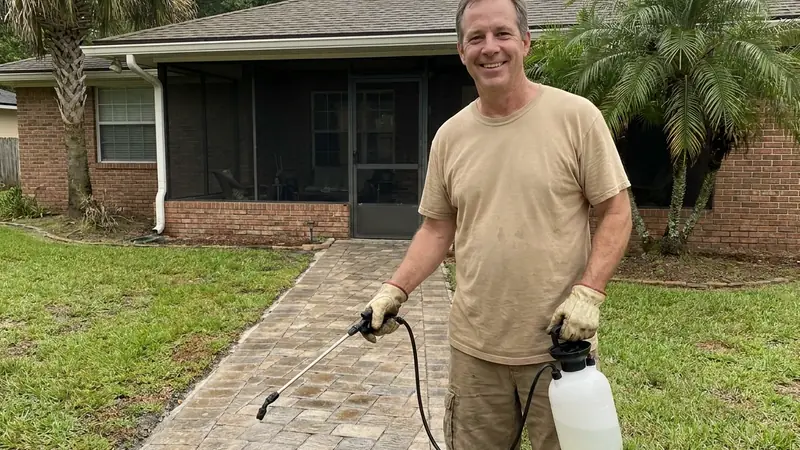
What do sealed pavers look like around Royal Terrace?
Why local matters in Royal Terrace
A contractor who works near Royal Terrace knows the area is a mix of older homes and houses built in the last few decades. That mix means the pavers could be any age, from a few years to a few decades. Someone who asks first, instead of assuming, picks the right products. To reach a contractor who knows these blocks of the Mid-Westside, call (904) 842-3763.
Local knowledge also means access. Streets here were rebuilt or resurfaced in the seven-year improvement program, which also added curbs and sidewalks. A contractor who knows the blocks knows where to park, where to run hoses and how to keep your street clear. You can ask for a free estimate online and ask how a visit would be set up on your street.
Small jobs need honest pricing. A contractor who works compact lots knows that a front walk costs more per foot than a big drive. Ask about minimums early, so there is no surprise on the bill. If you want a firm number, ask for a free estimate online and give your measurements or a photo.
What is the history around Royal Terrace that I should know about?
Moncrief Road runs nearby, and it began as a toll road built by the developer of Moncrief Park, a tourist attraction of the 1870s. It was the city's third paved road and, before I-95 opened in 1960, the main link between Northwest Jacksonville and downtown. The Point, where Myrtle Avenue and Moncrief Road meet, once had two streetcar lines. If you live near either, ask for a free estimate online.
Holley's Bar B Q opened near The Point in 1937. Moncrief Park had a racetrack from 1909 to 1911, and in 1914 the land became the Moncrief neighborhood. Royal Terrace itself received a seven-year improvement program that added a park, a community center and a clinic, and renovated Royal Terrace Plaza. Near any of these Royal Terrace places, call (904) 842-3763 and name your street.
The Point, where Myrtle Avenue, Moncrief Road and West 25th and 26th Streets meet, once had two streetcar lines that ran until the 1930s. Moncrief Park's racetrack closed after its last race on April 1, 1911. By 1914 the land had become a residential subdivision, the Moncrief neighborhood. If your home is near any of these streets, ask for a free estimate online.
Frequently Asked Questions
Is it good to seal pavers in Royal Terrace?
Yes, for most homes it is. A coat slows color fade and holds sand in the seams during summer rain on sandy ground. The coat wears, so plan on a fresh one in a few years. Sealing also gives joint weeds less to hold on to. Short drives and front walks respond well to a clean, full, sealed surface.
How long do paver sealers last in Royal Terrace?
Expect a fresh coat after two to five years, going by local quotes. Shade, tire turns and sun all change the number. Water that soaks in instead of beading is a sign it is time.
How much does it cost to have pavers cleaned and sealed in Royal Terrace?
The published figure is $1.75 to $3.25 per square foot to clean, sand and seal around Northeast Florida. Small jobs often land toward the higher end. Ask each company to put the total area on the quote. One line for wash, sand and seal makes it simple to check. A small walk usually sits toward the higher end of the range.
Why is paver sealing so expensive?
The bulk of the price is prep work rather than product. Safe Touch says it quotes after the joints are inspected, strips failed sealer first and restores lost sand before sealing. If failed sealer must be stripped first, the total climbs. A small area still carries the same setup time as a large one.
Will a small Royal Terrace job cost more per square foot?
Often it will. A Jacksonville cost guide says prep time does not shrink with the surface, so small projects usually cost more per square foot. A few companies also set a minimum job size. Combine a walk and a drive for a better rate, and ask the contractor if a bundle changes the minimum.
Why do my new pavers have a white haze?
That is usually efflorescence, a mineral haze. Unilock says it does not hurt the strength of concrete pavers, though rain alone may not remove it. It has to clear before sealer goes on, so a newer patio may need to wait. The contractor can tell by looking whether the haze is gone.
Can I put new sealer over the old coat on my Royal Terrace pavers?
Not always, because a water base and a solvent base do not mix, and an oil-based coat has to be stripped first. The contractor checks what is on the surface before picking a product. A receipt from the earlier job helps, and so does a photo.
Will sealing fix a sunken paver on my Royal Terrace walk?
No, a sunken paver needs to be reset first. A Jacksonville company warns that sealing over a lifted or sunken spot simply keeps the problem in place. Point out the spot at your first visit so it goes on the list. The fix is a reset, not more sealer.
Nearby areas we serve
Ready for a Free Estimate in Royal Terrace?
Call (904) 842-3763 and tell us about your pavers.
Free, no obligation